


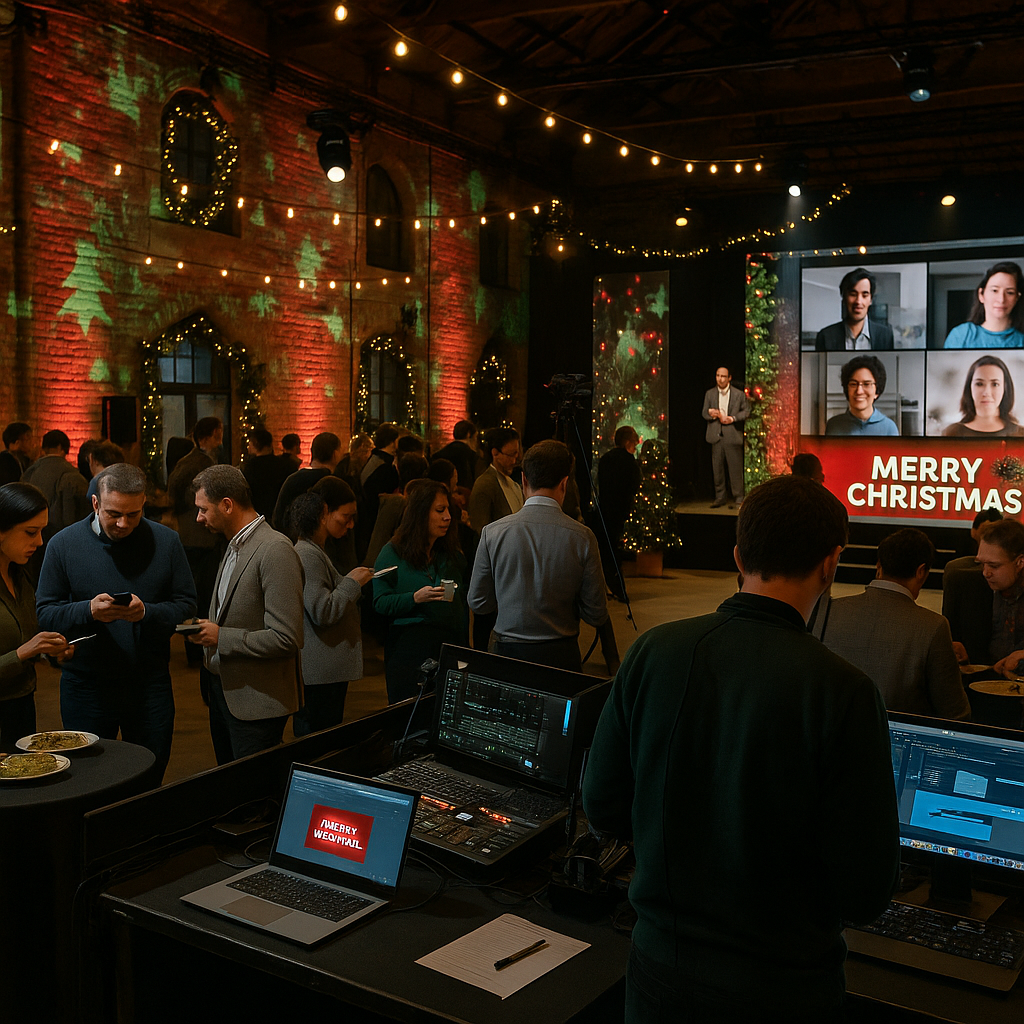
Christmas continues to be one of the most commercially significant and logistically complex periods in the events calendar. For many organisations, year-end celebrations are no longer just about a single party, but a broader opportunity to recognise teams, engage clients, and reinforce company culture. As planning cycles for 2026 accelerate, event professionals are reassessing formats, venues, technology and experience design to meet rising expectations and shifting workforce demographics.
Background and industry context
While traditional seasonal gatherings remain popular, the structure and objectives of Christmas events have evolved. Many organisations now see festive activity as part of a wider internal communications and engagement strategy rather than a standalone social occasion.
Several underlying trends are shaping how these events are planned and delivered:
- A more experience-led approach, with audiences expecting interactivity, personalisation and storytelling rather than a purely food-and-entertainment format.
- Heightened focus on inclusivity, recognising different cultures, beliefs, accessibility needs and working patterns across hybrid and global teams.
- Ongoing integration of digital tools, from registration and communication platforms to hybrid participation options for remote employees.
- A rising proportion of younger attendees, including Gen Z employees, whose expectations around authenticity, values and digital engagement differ from previous generations.
These factors are prompting organisers to rethink everything from venue selection and supplier partnerships to program content and measurement of outcomes.
Key developments in Christmas event formats
One of the most notable shifts for 2026 is the move towards more immersive and thematic experiences. Instead of standard dinner-and-disco formats, many briefs now call for multi-sensory environments, interactive installations and narrative-led event journeys.
For venues, this is translating into demand for flexible spaces that can be adapted with projection, lighting, staging and scenic design. Suppliers offering creative production, experiential technology or custom builds are seeing increased interest for seasonal concepts that can be tailored to different organisations while still delivering a recognisably festive atmosphere.
Catering is also evolving beyond traditional set menus. Organisers are exploring more varied formats such as food stations, street-food style service, tasting experiences and chef-led activations that double as entertainment. Dietary requirements and cultural preferences are now treated as a core design consideration rather than an afterthought, with plant-based and low- or no-alcohol options expected as standard.
At the same time, there is greater experimentation with timings and structures. Some companies are moving away from a single evening celebration to a series of smaller gatherings, daytime experiences or department-level events, often supported by digital platforms to unify communications and branding.
Inclusive celebrations and Gen Z expectations
Inclusive planning has moved up the agenda for Christmas 2026. Rather than positioning events solely around traditional Christmas imagery and activities, many organisations are opting for seasonally themed celebrations that acknowledge the diversity of their workforce. This can include neutral winter motifs, broader end-of-year celebrations or programming that highlights multiple cultural traditions.
Accessibility is equally central, from physical access and sensory considerations to scheduling that works for shift-based or international teams. Clear pre-event communication, accessible content formats and on-site support are increasingly regarded as essential components of responsible event design.
Gen Z employees, now a growing segment of the workforce, are influencing these decisions. They typically place strong emphasis on sustainability, social responsibility and authenticity. For Christmas events, this is driving interest in:
- More sustainable production choices, such as reduced single-use materials, responsible catering and local sourcing.
- Meaningful activities, including charity partnerships, volunteering elements or purpose-led storytelling, incorporated into celebrations.
- Interactive formats such as gamified experiences, digital photo and video content, and social media-ready moments that still feel genuine.
Technology providers supporting seasonal events are responding with features that encourage participation and content sharing while allowing organisers to maintain brand control and security.
Role of event technology in festive experiences
Event technology is now a core component of Christmas event planning rather than a bolt-on. Platforms used throughout the year for conferences and town halls are being repurposed to support end-of-year celebrations, particularly for organisations with hybrid or dispersed teams.
Key applications include:
- Registration and communication platforms to manage guest lists, dietary requirements, travel logistics and pre-event information efficiently.
- Event apps or web portals giving attendees access to agendas, venue details, interactive maps, FAQs and engagement tools such as live polling or Q&A.
- Hybrid and virtual components that allow remote employees to join live streams of awards, speeches or entertainment, or to participate in separate online experiences designed specifically for virtual audiences.
- On-site engagement tools such as digital gamification, AR filters, photo booths and interactive displays that encourage participation and capture content.
- Analytics and reporting that help organisers understand attendance, engagement levels and feedback, supporting decisions for future years.
For suppliers and venues, integration with these platforms is becoming a differentiator, whether through API connections, content-sharing workflows or alignment on data and privacy requirements.
Industry impact and opportunities
As organisations reframe Christmas events as strategic engagement moments, spend is often being redistributed rather than simply increased. Budgets may need to cover both physical and digital components, more diversified catering and higher production values for immersive environments.
This reallocation creates opportunities across the event ecosystem:
- Venues that offer strong in-house technical infrastructure, flexible layouts and sustainability credentials are better positioned to secure seasonal bookings.
- Technology providers can extend their role beyond core meetings and conferences into seasonal campaigns, offering modular solutions tailored to festive event needs.
- Agencies and production partners with expertise in experiential design, inclusive programming and content creation can support clients in developing coherent end-of-year narratives rather than one-off parties.
At the same time, operational pressures remain high. Christmas is a peak period for staffing, transport, hospitality and supply chains. Reliable digital systems for scheduling, supplier management and on-site coordination are critical to keeping events running smoothly during this concentrated window.
Why this matters for event professionals and technology providers
For event planners, HR teams and internal communications professionals, Christmas 2026 planning is an opportunity to align seasonal activity with wider organisational priorities. Well-designed events can reinforce culture, retain talent and close the year with a clear message, particularly in environments where teams are geographically or functionally fragmented.
For technology providers, the festive season is a proving ground for usability and scalability. Platforms must handle high volumes of registrations, content and support queries during a compressed timeframe, while still delivering intuitive experiences for attendees who may be less familiar with event tech than year-round conference audiences.
Vendors that can demonstrate reliability, strong support and integrations with venue and production workflows are likely to deepen their relationships with corporate clients beyond the Christmas period. Features that enhance inclusivity, accessibility and sustainability will also become more important in procurement decisions.
Conclusion
Christmas events in 2026 are set to be more experience-driven, inclusive and digitally enabled than in previous years. As organisations seek new ways to celebrate, reward and connect, planners are turning to a mix of innovative venues, specialist suppliers and robust event technology to deliver cohesive, future-focused festive programmes.
Those that plan early, prioritise inclusivity, and integrate physical and digital components effectively will be best placed to turn seasonal celebrations into strategic, measurable engagement moments. For the event technology sector, the Christmas period is no longer just a year-end spike in enquiries, but a key touchpoint in long-term client relationships and platform adoption.