


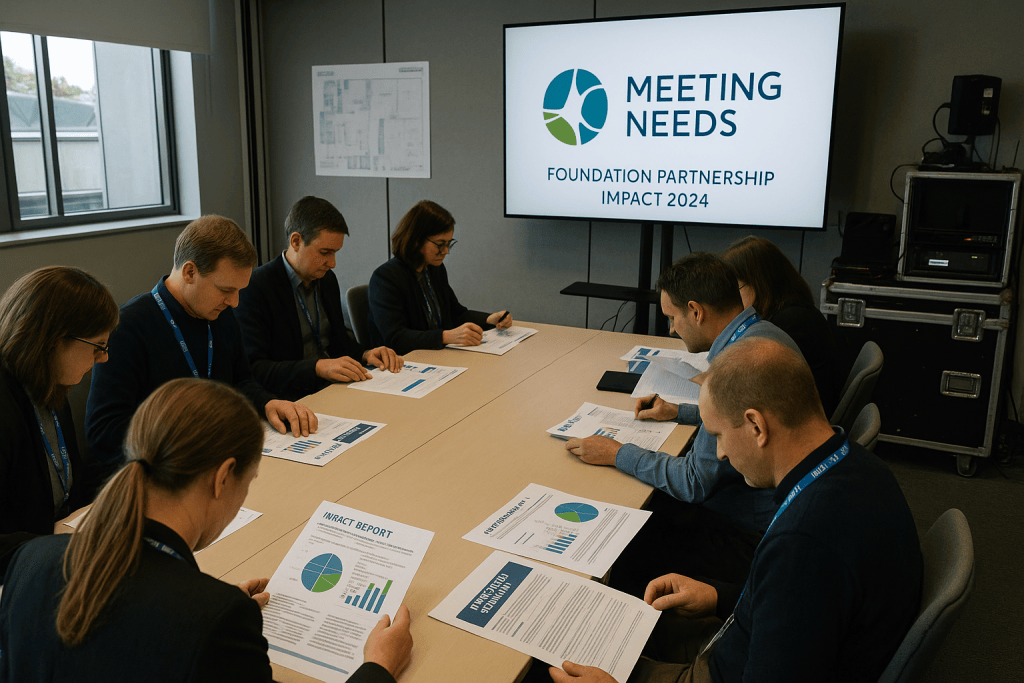
Meeting Needs, the charity founded by and for the events sector, is stepping up calls for suppliers, agencies and venues to join its Foundation Partnership scheme as organisations face mounting expectations to demonstrate tangible social impact.
The initiative is designed to give event businesses a structured way to contribute to charitable projects while showing measurable outcomes, rather than relying on static CSR statements or ad hoc donations. Existing partners include major industry stakeholders such as ExCeL London and MAGS, with the charity now seeking wider backing from across the supply chain.
Background: rising expectations around social impact
Across the events ecosystem, buyers, sponsors and attendees are increasingly scrutinising how organisers, venues and suppliers address environmental, social and governance (ESG) priorities. For many event businesses, this has moved CSR from a communications exercise to a requirement embedded in procurement processes, RFPs and long-term client relationships.
Within this context, event technology providers, production companies, venues and agencies are under pressure to provide clearer evidence of how they contribute to communities and social causes. Industry charities such as Meeting Needs are positioning structured partnership programmes as a way to turn isolated charitable activity into sustained, reportable impact.
Key developments in the Foundation Partnership scheme
Meeting Needs is now actively seeking more event industry companies to come on board as Foundation Partners. The scheme offers a framework through which partners commit to ongoing financial support, typically on an annual basis, to fund projects selected and monitored by the charity.
These projects often focus on issues such as education, health, access to clean water, and community development, with an emphasis on smaller, well-governed initiatives where relatively modest funding can produce visible results. The organisation regularly reports back to partners on how funds have been allocated and what outcomes have been achieved, allowing participating companies to share verified impact stories with clients and stakeholders.
By expanding its Foundation Partnership base, Meeting Needs aims to stabilise and grow its funding pipeline. This in turn would enable the charity to support a larger portfolio of projects globally, while giving more event businesses an accessible route to coordinated CSR engagement.
Industry impact and implications
For the wider events industry, the expansion of schemes like the Meeting Needs Foundation Partnership reflects a broader shift toward structured, collective approaches to social responsibility. Rather than each business independently sourcing causes and verifying impact, pooled initiatives can centralise due diligence and reporting, reducing the administrative burden on individual companies.
Venues, agencies and suppliers that participate can integrate the partnership into their sustainability and CSR narratives, particularly where clients ask for concrete examples of community or social investment linked to event activity. This may be especially relevant in competitive tenders, where demonstrable social value is becoming a differentiator alongside pricing, innovation and environmental credentials.
As the sector continues to rebuild and evolve, initiatives of this type also contribute to industry reputation. A recognised, collective charity platform allows event businesses to align around shared values and showcase sector-wide commitment to social impact, which can support advocacy with policymakers, investors and corporate buyers.
Why this matters for event professionals and technology providers
For event professionals, involvement in a structured foundation scheme can help meet growing stakeholder expectations in several ways:
- Evidence-based CSR: Regular reporting from a central charity partner gives planners and suppliers credible data and case studies to include in proposals and post-event documentation.
- Client alignment: Many corporate clients have their own ESG goals and expect partners to reflect similar commitments. Being part of an established industry charity initiative can demonstrate that alignment in practical terms.
- Operational simplicity: Outsourcing project selection, governance checks and impact measurement to a charity specialist can be more efficient than running multiple in-house CSR projects, particularly for small and mid-sized providers.
- Employee engagement: Staff involvement in fundraising, volunteering or awareness activities linked to a recognised sector charity can enhance team morale and support talent retention.
For event technology companies specifically, a partnership with an industry charity can complement existing sustainability and accessibility initiatives within platforms and products. As digital and hybrid event tools increasingly include features related to inclusion, community engagement and responsible operations, association with a social impact programme can help reinforce those efforts.
Technology providers can also use structured CSR participation as part of their differentiation strategy in a crowded marketplace. When pitching platforms to corporate or association clients, being able to point to verifiable social impact activity can support brand positioning alongside product capabilities and service levels.
Conclusion
Meeting Needs’ call for additional Foundation Partners reflects a wider moment for the events sector, as CSR and social impact move from optional messaging to a core expectation in commercial and procurement discussions. By scaling its partnership programme, the charity aims to channel collective support from venues, agencies, suppliers and technology firms into a portfolio of accountable, high-impact projects.
For event businesses assessing how best to structure their social responsibility efforts, participation in an industry-specific foundation scheme offers one potential route to consistent, measurable impact. As clients and stakeholders demand greater transparency and proof of outcomes, initiatives that combine centralised governance with sector-wide collaboration are likely to gain increasing relevance across the global events ecosystem.