


Venue-operator relationships in the exhibitions sector are moving beyond transactional, one-off space bookings towards deeper, strategic partnerships. As organisers reassess their portfolios and in-person strategies, venues that position themselves as long-term collaborators, rather than short-term suppliers, appear better placed to support event growth and resilience.
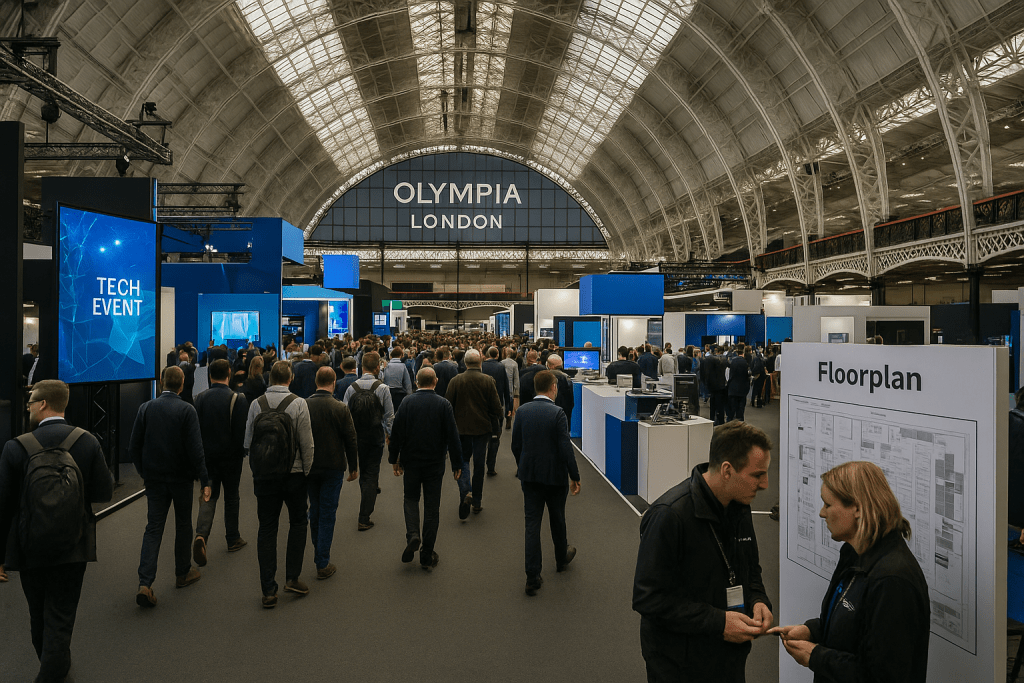
In this context, Olympia London has entered into new multi-year agreements with three established shows: London Tech Week, Big Data LDN and Decorex. While each event serves a different audience and sector, the shared approach is to formalise extended commitments that enable joint planning, investment and long-term development of the exhibitions.
Industry context: exhibitions under pressure to evolve
Global exhibition organisers are operating in a more complex environment than before the pandemic. Audiences are more selective about travel, digital channels compete for attention, and exhibitors are demanding clearer returns on their investment. At the same time, venues face their own challenges, including pressure on utilisation rates, changing customer expectations and the need to differentiate in a competitive market.
These dynamics are prompting both sides to reassess how they work together. Rather than negotiating year by year and focusing primarily on rental terms and dates, many organisers and venues are exploring longer-term models that allow them to share data, align on audience development and co-invest in infrastructure and services.
Within technology, data, and design-focused sectors in particular, shows must keep pace with rapid innovation cycles. Consistent venue support can help organisers test new formats, integrate hybrid features, and optimise attendee journeys over several editions rather than starting from scratch each year.
Key developments: Olympia London’s multi-year agreements
The newly announced deals between Olympia London and London Tech Week, Big Data LDN and Decorex formalise that shift toward partnership-based models. While commercial terms have not been disclosed, the agreements extend over multiple editions, providing all parties with greater visibility and planning stability.
Each event brings a distinct community to the venue:
- London Tech Week draws a broad technology ecosystem, including enterprise leaders, start-ups, investors and policymakers. For a tech-focused gathering that relies on international participation and cutting-edge content, consistent venue collaboration can support experimentation with formats such as summits, showcases and innovation zones.
- Big Data LDN serves the data, analytics and AI community, with a strong emphasis on technical content and exhibitor-led solutions. Longer-term arrangements allow for incremental improvements in visitor flow, demo spaces and connectivity requirements as the show scales.
- Decorex focuses on high-end interior design and specification. For design-led shows, consistent use of a venue can help organisers refine the look and feel of the event, improve build logistics and maintain a recognisable experience for returning exhibitors and visitors.
By placing these exhibitions on a multi-year footing, Olympia London and the respective organisers can plan beyond the next show cycle. This may include coordinated marketing timelines, data-sharing to better understand visitor behaviour, and joint assessment of how the event footprint and configuration should evolve across editions.
Industry impact: from space hire to strategic collaboration
The move towards long-term agreements reflects a broader evolution in how major exhibitions are planned and delivered. When organisers and venues know they will be working together for several years, they are more likely to invest in:
- Infrastructure and technology – including connectivity upgrades, digital wayfinding, audience analytics and hybrid capabilities that are difficult to justify on a single-year basis.
- Data-driven decision-making – using multi-year attendance and engagement data to refine hall layouts, session scheduling, networking areas and on-site services.
- Operational efficiency – streamlining build and breakdown processes, security, catering and transport arrangements as familiar teams work together over repeated cycles.
- Audience and exhibitor retention – creating a reliable, recognisable environment that encourages exhibitors and visitors to return, while offering incremental improvements that demonstrate progress from one year to the next.
For sector-specific events like London Tech Week and Big Data LDN, this can translate into more consistent technical infrastructure, such as robust Wi-Fi, power distribution for hardware-heavy stands and flexible conference setups. For design-led shows such as Decorex, it can mean fine-tuning the aesthetics of the halls, lighting and attendee flow.
Multi-year commitments may also influence how international organisers view host cities. When high-profile events secure long-term homes, they can provide anchor points for local ecosystems and signal stability to sponsors, exhibitors and partners.
Why this matters for event professionals and technology providers
For organisers, committing to a venue for several years is both an opportunity and a responsibility. It creates room to experiment with new technologies and formats, but it also demands a clear strategic roadmap. Organisers can use this stability to:
- Plan content and audience development over multiple editions, rather than treating each year as a standalone project.
- Embed digital tools such as event apps, matchmaking, session streaming and data dashboards in ways that can be refined incrementally.
- Negotiate more integrated service packages that align venue capabilities with the event’s long-term vision.
Technology providers stand to benefit as well. Longer-term partnerships create a better environment for deploying solutions that require integration and iteration, such as registration platforms, access control, lead capture, analytics and immersive experiences. When a venue and organiser are committed to working together for several years, tech partners are more likely to be brought into discussions early and involved in longer-range planning.
For venues, this approach can support more predictable revenue streams and justify capital expenditure on digital infrastructure, sustainability measures and upgraded visitor amenities. It also shifts their role towards that of a strategic collaborator, contributing insight into attendee behaviour, operations and space utilisation.
Conclusion
Olympia London’s new multi-year agreements with London Tech Week, Big Data LDN and Decorex highlight a growing trend in the exhibitions market: the move from short-term, transactional arrangements to deeper, partnership-driven models. As market conditions remain fluid and digital expectations increase, both organisers and venues are finding value in long-term collaboration that enables shared planning, co-investment and iterative improvement.
For event professionals and technology providers, these developments underline the importance of thinking beyond a single show cycle. Long-term partnerships can provide the framework needed to introduce new formats, embed technology more effectively and deliver consistent, measurable value to exhibitors and attendees over time.