


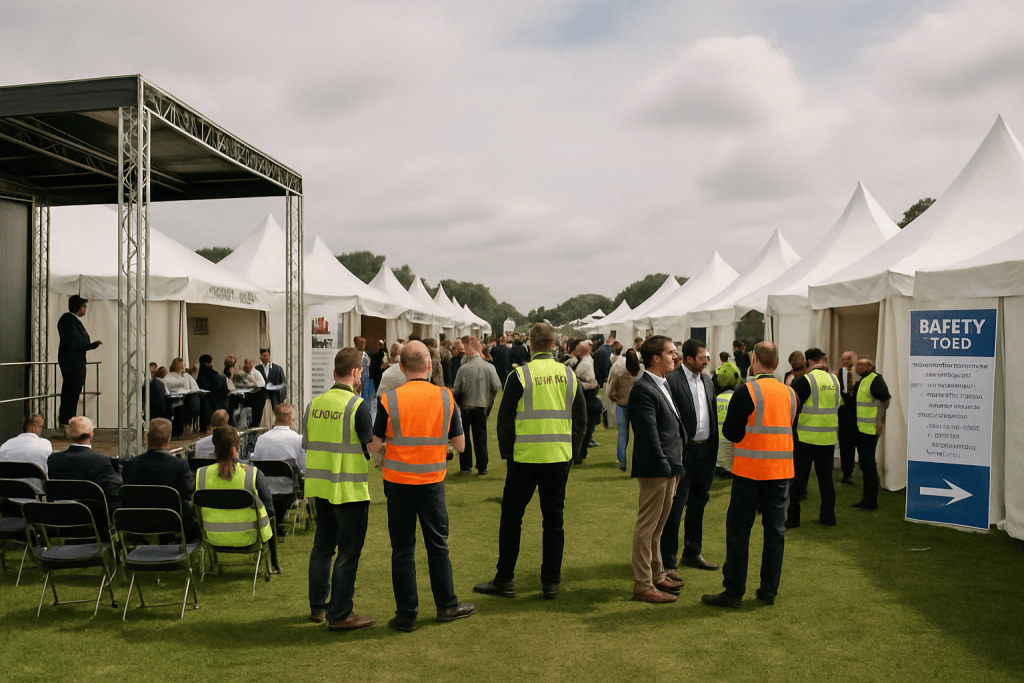
The Showman’s Show is collaborating with the National Outdoor Events Association (NOEA) to stage a preview session of NOEA’s forthcoming Training Day, giving outdoor event professionals an early look at new educational content focused on operational resilience and best practice.
The initiative will see senior practitioners from across the outdoor events ecosystem convene at this year’s Showman’s Show for a concentrated programme segment designed as a “taster” of the full NOEA Training Day, which is scheduled to launch separately. The preview aims to provide organisers, suppliers and local authority stakeholders with practical insight into managing one of the most challenging periods the outdoor events market has faced in recent years.
Background and industry context
The outdoor events sector has undergone a period of sustained pressure, with organisers navigating post-pandemic audience expectations, rising costs, stretched workforces, and evolving safety and licensing requirements. Festivals, greenfield shows, sporting events and public celebrations are all grappling with how to deliver high-quality experiences while maintaining financial and operational stability.
Trade bodies and industry organisations have increasingly focused on structured learning and peer-to-peer knowledge sharing as a way to mitigate risk and enhance professionalism across the sector. NOEA, which represents outdoor event organisers, suppliers and authorities, has been expanding its training and guidance programmes to support members in areas such as safety management, legal compliance, stakeholder engagement and operational planning.
The Showman’s Show, a long-standing exhibition for outdoor event equipment, services and production expertise, has emerged as a key forum for these conversations. Its mix of product showcases, technical suppliers and specialist sessions creates a natural environment for targeted training content aimed at professionals responsible for delivering complex outdoor productions.
Key developments in the partnership
Under the new collaboration, NOEA will use the Showman’s Show as a platform to introduce core elements of its upcoming Training Day. The preview will feature experienced operational leaders drawn from multiple segments of the outdoor events supply chain, including production, crowd management, infrastructure and safety planning.
Rather than a broad introductory seminar, the session is expected to home in on one of the most pressurised topics currently affecting outdoor event operators. While specific agenda items have not been publicly detailed, organisers have signalled that the programme will focus on the real-world operational challenges professionals are facing this season and into the next cycle.
The format is designed to be interactive and scenario-based, allowing attendees to hear how peers are adapting operational plans, negotiating constraints and working with partners to maintain event quality and compliance. The taster will also act as a signpost to the full NOEA Training Day, where participants will have access to deeper, structured content and extended case studies.
For the Showman’s Show, the partnership adds another layer of professional development to a show floor that already features a wide range of outdoor event products, from staging, power and temporary structures to crowd control systems and site services. For NOEA, it offers a live testing ground for its training approach and a chance to engage directly with practitioners who are making purchasing and operational decisions for the next event season.
Industry impact and opportunities
By collaborating on a training preview, both organisations are placing greater emphasis on skills, standards and knowledge sharing as key levers for sector recovery and growth. The initiative signals that technical equipment and services alone are no longer sufficient; operators need access to structured guidance on how to deploy those resources effectively under rapidly changing conditions.
The session is likely to reinforce messages around cross-disciplinary collaboration between organisers, suppliers and public agencies. Over recent seasons, outdoor event planning has increasingly required integrated teams working across safety advisory groups, licensing departments, emergency services, infrastructure providers and creative production specialists. Training that reflects this interconnected landscape can help reduce misunderstandings and align expectations between parties.
In practical terms, the preview may also help shape the final content and format of the full NOEA Training Day. Feedback from Showman’s Show attendees—many of whom are responsible for on-the-ground delivery of festivals, shows and public events—could influence which operational themes receive greatest emphasis and how training modules are structured.
Why this matters for event professionals and technology providers
For outdoor event organisers, the collaboration offers an efficient way to access focused, operational training alongside a major sourcing and networking opportunity. Professionals attending the Showman’s Show can combine discovery of new infrastructure, production tools and safety solutions with exposure to evolving operational best practice and risk management thinking.
The training preview is particularly relevant for teams dealing with constrained budgets, staff turnover and increased regulatory scrutiny. Structured sessions that distil lessons from recent seasons can help operations leads and production managers refine their planning assumptions, adjust site layouts, stress-test crowd management approaches and consider new supplier models.
Technology and service providers in the outdoor events ecosystem also stand to benefit. A clearer understanding of organisers’ pain points—whether related to data sharing, site monitoring, communications, access control or contingency planning—can inform product development and service design. Vendors showcasing at the Showman’s Show may gain sharper insight into how their tools fit into complex operational workflows and compliance frameworks.
The focus on training also underscores a shift towards continuous professional development in the outdoor space. As digital systems, remote monitoring tools, ticketing platforms and safety technologies become more integrated into event operations, staff need more than ad-hoc learning to keep pace. Structured programmes such as NOEA’s Training Day, introduced through high-visibility previews, could help normalise ongoing education as part of standard event planning cycles.
Conclusion
The decision by the Showman’s Show and NOEA to jointly deliver a Training Day taster session highlights how education and operational knowledge sharing are moving to the forefront of the outdoor events agenda. By anchoring the preview within a major industry exhibition, the partners are aligning training with the practical realities of sourcing, planning and delivering large-scale outdoor experiences.
As the sector continues to adapt to economic, regulatory and audience pressures, initiatives that bring operational experts together in a structured learning environment are likely to become more prominent. The forthcoming preview at the Showman’s Show will give the market an early indication of how NOEA intends to support outdoor event professionals through a more formalised training framework, and how collaborative approaches between trade bodies and industry shows can help raise standards across the field.