


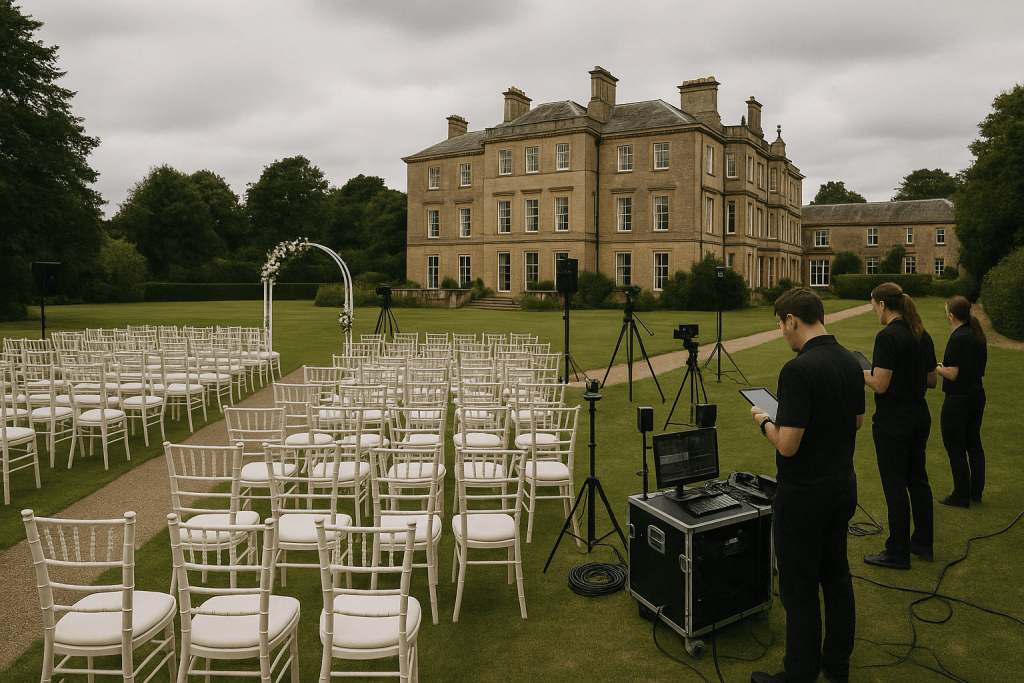
The UK government has opened a consultation on plans to update marriage legislation in England and Wales, signalling potential changes to where and how legal wedding ceremonies can be held. If implemented, the reforms could alter the operating environment for venues, planners and suppliers that support the weddings and private events market.
While the consultation focuses on legal structures rather than commercial strategy, any move toward a more flexible system is likely to influence venue selection, event formats and the technologies used to deliver and manage ceremonies.
Background and industry context
Current marriage law in England and Wales is based on a building-focused model, with strict rules on what constitutes an approved venue and the conditions under which legal ceremonies can take place. Locations are typically licensed premises such as religious buildings, register offices or approved secular venues, and there are tight constraints on their use for legally binding ceremonies.
Industry stakeholders have long argued that this framework lags behind contemporary expectations for personalised, location-flexible weddings. Consumer demand has shifted toward non-traditional venues, outdoor settings and more bespoke formats that blend in-person and digital elements. At the same time, the growth of event management platforms, streaming tools and hybrid event technologies has made it easier to stage ceremonies across multiple locations and channels.
The pandemic further highlighted the limitations of a rigid venue-based system. Restrictions on gatherings forced many couples to postpone weddings, reduce guest numbers or investigate livestreaming and virtual participation. This period accelerated the use of digital tools across the weddings sector, but it also underlined the challenges created when legal requirements do not align with modern event delivery methods.
Key elements of the government consultation
The consultation outlines proposals for moving away from a system that is primarily tied to licensed buildings and toward a more flexible framework. While specific legislative outcomes remain subject to review, the broad intention is to focus on who can conduct a marriage and the conditions under which it is valid, rather than strictly prescribing the physical setting.
Under this type of model, legal ceremonies could potentially take place in a wider variety of locations, subject to defined safeguards. This might include private venues that are not currently licensed for weddings, temporary structures, outdoor spaces and more customised settings that reflect couples’ preferences.
For event businesses, any legal shift that expands permissible locations would open up new service models. Venues could position previously non-licensed spaces for ceremonies, while planners and suppliers could design end-to-end experiences that are less constrained by licensing rules. Catering, production, décor, AV, and technology partners would be able to support a broader range of formats and sites, including pop-up and destination-style events within England and Wales.
The consultation also signals an interest in modernising processes around notification, documentation and ceremony management. Although technology is not the primary focus, any move toward clearer or more digital-friendly procedures could intersect with existing event management platforms that already handle guest data, schedules, communications and vendor coordination.
Potential impact on venues and suppliers
If reforms progress, venues may reassess how they package and price wedding services. Spaces that previously hosted only receptions or private events could be marketed as full ceremony locations, potentially increasing utilisation and diversifying revenue. This may include hotels, heritage sites, conference centres, museums, galleries and attractions that until now have been constrained by licensing requirements.
Event suppliers could also see new opportunities. Production companies that specialise in staging, lighting and sound may play a larger role in transforming non-traditional sites into ceremony-ready environments. Catering firms could support more dispersed or modular event formats, while décor and design businesses might benefit from greater demand for customised, site-specific installations.
Technology providers in the event space stand to gain from a more fragmented and flexible venue landscape. As legal ceremonies move beyond a limited set of approved buildings, organisers may rely more heavily on digital tools to manage logistics, compliance, guest experience and hybrid participation. Platforms that support floor plans, access control, scheduling, remote attendance and stakeholder communication could become more central to wedding delivery workflows.
At the same time, any reform will likely be accompanied by new guidance and compliance requirements. Venues and planners will need clear processes to ensure that ceremonies meet legal standards in diverse settings. This could create demand for features such as document tracking, identity verification, role management and audit trails within event management systems.
Industry considerations and challenges
While the proposals point to potential commercial and operational benefits, they also pose questions for the sector. Capacity and staffing will need to be assessed if more locations can host ceremonies during peak periods. Training may be required for teams accustomed to traditional licensed venues who will now operate in more varied environments.
Health and safety, risk management and guest experience will all need careful planning in less controlled spaces. This could increase reliance on suppliers with expertise in outdoor production, temporary structures, power, connectivity and contingency planning. Technology that supports real-time monitoring, communication and incident management may also become more relevant to wedding operations.
There may also be regional variations in how quickly different parts of the market adapt. Some venues and suppliers are already experienced in bespoke and off-site events, while others have business models built around established licensed premises. The scale and pace of change will depend on the final shape of the legislation and the guidance that accompanies it.
Why this matters for event professionals and technology providers
For professionals in the events ecosystem, the consultation is a signal to review existing service offerings and technology stacks in anticipation of a more flexible regulatory framework. Venues may wish to map underutilised spaces and consider how they could be configured for legal ceremonies, including requirements for access, acoustics, connectivity and guest flow.
Planners and production companies can evaluate how their capabilities align with a potential increase in non-traditional ceremony sites. This might involve deeper collaboration with AV, staging and infrastructure partners, as well as closer integration with digital tools that support multi-location and hybrid experiences.
For technology firms, the reforms create an opportunity to tailor solutions more specifically to weddings and civil ceremonies. Features such as ceremony scheduling, officiant management, legal documentation workflows, guest communication and streaming integration could become stronger selling points. Products that can bridge the gap between regulatory compliance and creative event design are likely to be in demand if the market becomes more fragmented.
Data and analytics could also play a greater role. As ceremonies move into a wider range of settings, understanding booking patterns, utilisation rates, guest behaviours and operational costs will be critical for commercial decision-making.
Conclusion
The government’s review of marriage law in England and Wales has the potential to reshape the weddings landscape for venues, planners, suppliers and technology providers. While the outcome of the consultation is not yet determined, the direction of travel toward more flexible, location-agnostic ceremonies is clear.
For the wider event industry, this moment offers both uncertainty and opportunity. Businesses that monitor the legislative process, engage with guidance as it emerges and adapt their operational models and technology infrastructure early are likely to be better positioned if the reforms are implemented. Regardless of the final detail, the consultation underscores a broader shift toward more personalised, adaptable and digitally enabled ceremonies, aligning the weddings sector more closely with wider trends in live and hybrid events.