


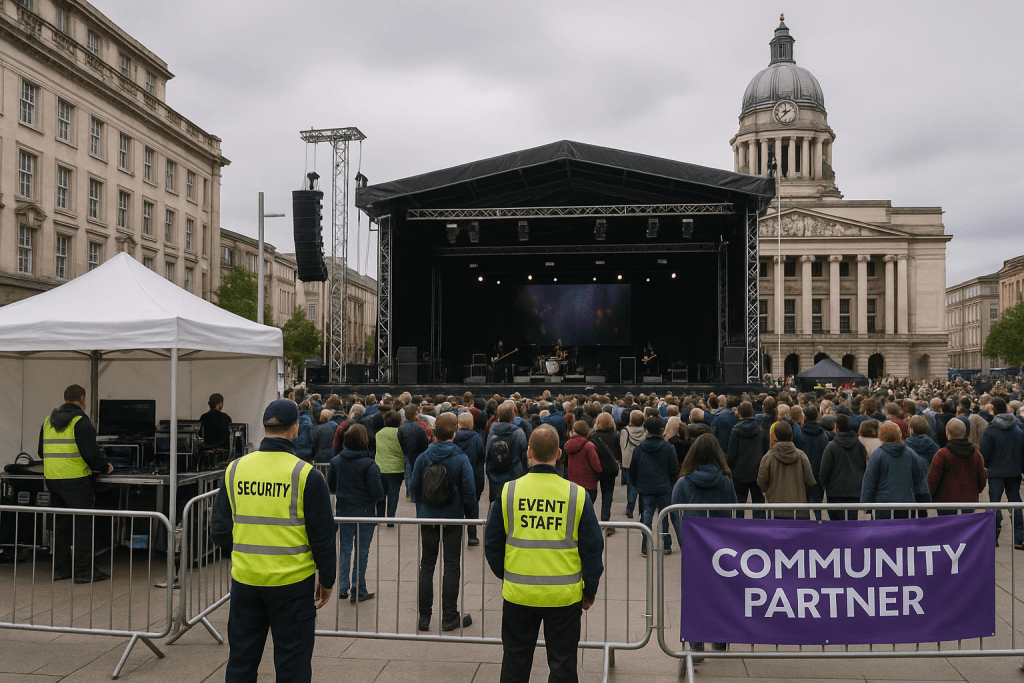
The National Outdoor Events Association (NOEA) has issued a response to the formation of the new UK government, broadly welcoming stated priorities around devolution, regional economic growth and closer collaboration between national and local authorities. The association highlighted that these policy areas align closely with how the outdoor events sector is structured and operates across the UK.
Outdoor events – from local festivals and cultural celebrations to large-scale sports and civic gatherings – are typically embedded in local communities and rely heavily on coordination between organisers, councils, public agencies and private suppliers. NOEA indicated that a government agenda focused on empowering regions and strengthening local decision-making could, if implemented effectively, support a more resilient and sustainable events ecosystem.
Background and industry context
The outdoor events industry in the UK spans a broad range of formats including music festivals, sporting events, community celebrations, agricultural shows and cultural programmes. These events are often delivered through complex partnerships involving local authorities, emergency services, private event producers, technology providers, infrastructure suppliers and community organisations.
In recent years, the sector has had to navigate a series of pressures, including recovery from the pandemic, rising operational costs, workforce challenges and evolving safety, licensing and environmental requirements. Policy decisions at both national and local level – covering planning, licensing, policing, transport, health and sustainability – directly affect the viability of outdoor events and their supply chains.
For many towns and cities, outdoor events form a core part of place-making and visitor strategies, driving tourism, hospitality revenue and local employment. As such, the industry has long argued for a more joined-up approach between central government, devolved administrations and local authorities, with consistent guidance and support for events that serve community, cultural and economic objectives.
Key themes in NOEA’s response
In its statement, NOEA expressed support for policy directions that emphasise:
- Greater devolution: The association noted that devolving more powers to regional and local authorities has the potential to improve how events are planned, permitted and supported, provided local decision-makers have the capacity and knowledge to engage effectively with organisers.
- Regional growth: Outdoor events were positioned as important drivers of regional economies, generating direct spend and supporting supply chains in production, logistics, technology, catering, accommodation and retail.
- Partnership between national and local government: NOEA underlined that clearer collaboration between central departments and local authorities could help standardise good practice, reduce administrative friction and provide a more stable environment for long-term event planning.
The association pointed out that these priorities mirror what many in the outdoor events industry have been advocating for over a number of years: a more strategic and consistent policy framework that recognises events as integral to community life and regional development, rather than as isolated or ad hoc activities.
Implications for the outdoor events ecosystem
If the new government follows through on its commitments, there are several potential implications for the outdoor events ecosystem across England, Scotland, Wales and Northern Ireland:
- Localised planning and licensing approaches: Devolved and empowered local authorities could tailor event frameworks to the needs of their communities, potentially streamlining processes where there is strong local support and clear safety planning.
- Enhanced place-based strategies: Regions pursuing growth agendas may look to outdoor events as catalysts for tourism and inward investment, prompting more formal integration of events into economic and cultural strategies.
- Closer collaboration with public services: A stronger emphasis on partnership could support more constructive relationships between event organisers, emergency services, transport authorities and health bodies, especially around risk management and crowd safety.
- Opportunities for innovation: With more attention on regional resilience and community engagement, there may be greater scope for piloting new formats, hybrid models and technology-enabled experiences that are rooted in local identity.
However, the association’s supportive stance is tempered by the recognition that policy intent needs to be matched by practical measures, resourcing and clear communication. The capacity of local authorities – many of which face budget constraints and staff shortages – will be a critical factor in how effectively any new approach is implemented.
Why this matters for event professionals and technology providers
For event organisers, production companies and suppliers, including technology vendors, the direction of travel outlined by the government and acknowledged by NOEA highlights several areas of strategic importance:
- Deepening local relationships: As decision-making shifts closer to the community level, organisers and suppliers may need to invest more time in understanding local priorities, consultation processes and political dynamics. Building long-term partnerships with councils and public agencies will become increasingly important.
- Demonstrating community value: Events that can show clear benefits – economic impact, social cohesion, cultural enrichment or health and wellbeing – are likely to align well with regional growth and devolution agendas. Data collection and impact reporting will play a bigger role in securing support.
- Adapting technology to local needs: Event technology providers will have opportunities to tailor solutions for regional and community-focused events, including tools for safety management, crowd intelligence, local stakeholder communication, accessibility and sustainability tracking.
- Engaging with policy development: Industry bodies such as NOEA will remain key channels between the sector and government. Suppliers and organisers who engage with consultations and working groups can help shape practical guidelines that reflect operational realities.
As local authorities explore how events fit into wider regeneration and cultural plans, there may be fresh demand for digital ticketing, access control, audience analytics, hybrid content delivery and community engagement platforms that can demonstrate inclusive reach and measurable outcomes.
Outlook and next steps
NOEA’s response signals that the outdoor events community is prepared to work constructively with the new government as its policy agenda develops. The association’s endorsement of themes such as devolution, regional growth and stronger multi-level partnerships reflects long-standing sector priorities, but practical results will depend on how these concepts are translated into regulation, funding and guidance.
For now, the statement serves as a reminder that outdoor events are closely tied to the fortunes of local areas and that any shift in the balance of powers between central and local government will have a direct influence on how events are conceived, approved and delivered. Event professionals and technology providers will be watching closely for further detail on policy proposals, with an eye on how they can align their planning, services and innovation pipelines to support a more regionally focused events landscape.
As the government begins to implement its programme, the level of ongoing dialogue between policymakers, local authorities and industry bodies like NOEA will be a key indicator of whether the new approach can unlock the full cultural and economic potential of outdoor events across the UK.