


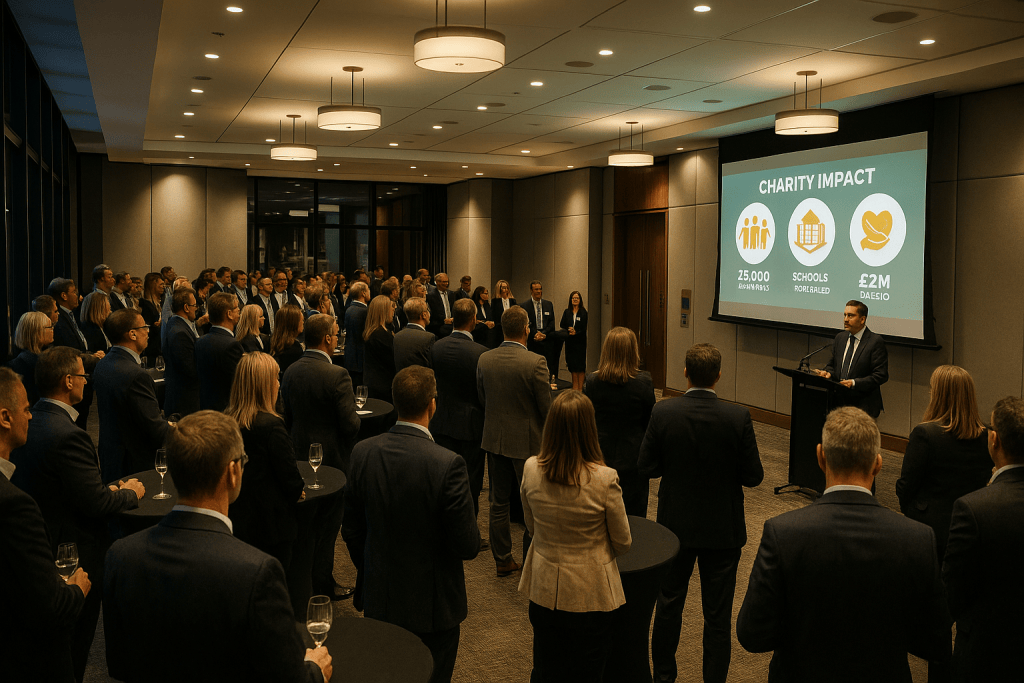
Meeting Needs has convened event industry professionals at London’s One Aldwych hotel for its latest annual showcase, using the gathering to review a year of fundraising, grant distribution and project outcomes in the UK and internationally. Around 85 supporters, partners and beneficiaries attended the event, which also recognised contributors to the charity’s work and highlighted the role of the business events sector in driving social impact.
Background and industry context
Meeting Needs is a charity founded and supported by companies and professionals across the meetings, incentives, conferences and exhibitions community. Its model centres on channeling donations, fundraising activities and corporate support from the events sector into grants for carefully vetted charitable projects.
For many organisers, venues and suppliers, engagement with Meeting Needs has become a way to formalise corporate social responsibility (CSR) within event programmes and internal culture. This includes integrating fundraising into conferences and awards, donating a portion of event revenues, or offering in-kind support such as meeting space or services. The showcase event at One Aldwych is one of the key points in the charity’s annual calendar, serving both as a progress update and as a forum for stakeholders to hear directly from funded projects.
Key developments at the annual showcase
The One Aldwych event brought together a cross-section of the meetings and events supply chain, including representatives from agencies, venues, service providers and industry associations. Attendees heard an overview of the past 12 months of activity, including funds raised, the number of projects supported and examples of outcomes delivered for communities in the UK and overseas.
The showcase was hosted in partnership with One Aldwych, which provided the setting and hospitality for the evening. By bringing beneficiaries into the room alongside donors and volunteers, the charity aimed to demonstrate how event-generated funds are translated into practical interventions on the ground, from education and health initiatives to community development and emergency support.
The evening also featured recognition for supporters within the events community who have played a notable role in fundraising or advocacy. Among the acknowledgements was a focus on the ongoing contribution of the industry’s creative talent, highlighted under the banner of “Events R’ Talented”, reflecting how individuals and teams in the sector use their skills and platforms to generate income and awareness for the charity.
Speakers outlined how a diverse portfolio of fundraising activities — from gala dinners and industry award nights to sponsored challenges and corporate donations — has enabled Meeting Needs to maintain and expand its grant-giving capabilities across different regions and causes.
Industry impact and charitable outcomes
Over the past year, Meeting Needs has continued to position the events industry as a collective force for social good. The funds raised through sector-led initiatives have been directed to small and medium-sized charitable projects that might otherwise struggle to access consistent support. Typical areas of focus include infrastructure and equipment for community services, education programmes, support for vulnerable groups, and international development schemes with clear, measurable goals.
For event businesses, participation often goes beyond financial donations. Many organisations use their own events as platforms to highlight the charity’s work, integrate fundraising mechanics into live and hybrid experiences, or showcase case studies of completed projects to internal teams and clients. This, in turn, has helped normalise CSR-focused content in conference agendas and has given delegates tangible examples of how their industry contributes to wider societal needs.
The showcase also underlined how charity partnerships can support staff engagement and wellbeing. By involving employees in fundraising challenges or volunteering opportunities connected to Meeting Needs projects, companies in the sector are using the relationship as a tool to build team cohesion and provide purpose-driven activities alongside commercial priorities.
Why this matters for event professionals and technology providers
For event organisers, agencies and venues, the Meeting Needs showcase underscores a sustained trend: CSR and social value are now core expectations rather than optional extras. Clients are increasingly seeking event programmes that reflect their own ESG (environmental, social and governance) commitments, and partnerships with sector-focused charities can help structure and evidence that activity.
From a technology perspective, the growth of charitable initiatives within events creates new requirements for platforms and tools. Hybrid and virtual event platforms, registration systems and mobile apps are being asked to support integrated donation journeys, real-time fundraising updates, content showcasing impact stories and post-event reporting on participation and funds generated.
Technology providers serving the MICE sector can respond by:
- Building donation and micro-giving options directly into registration and ticketing workflows.
- Enabling live fundraising features such as on-screen totals, sponsor-matched contributions and gamified challenges during sessions.
- Supporting impact storytelling through embedded video, case studies and data visualisations within event content hubs.
- Providing analytics that link CSR engagement — such as donations, pledges and volunteer sign-ups — with overall attendee behaviour and event outcomes.
For organisers, this capability can turn charitable partnerships from one-off activities into measurable, repeatable components of event design. It also offers additional narrative for stakeholder communications, demonstrating not only commercial success but also societal outcomes tied to meetings and conferences.
Conclusion
The recent Meeting Needs annual showcase at One Aldwych illustrated how firmly embedded charitable collaboration has become within the business events ecosystem. By bringing donors, partners and beneficiaries together, the charity provided a tangible view of what industry-backed fundraising can achieve and how those efforts translate into real-world change.
As event strategies continue to evolve, particularly with the increased use of digital and hybrid formats, opportunities are expanding for organisers and technology suppliers to integrate structured CSR activity into their platforms and programmes. The work highlighted at the showcase suggests that, when coordinated effectively, the events sector can continue to generate both economic value and significant social impact.