


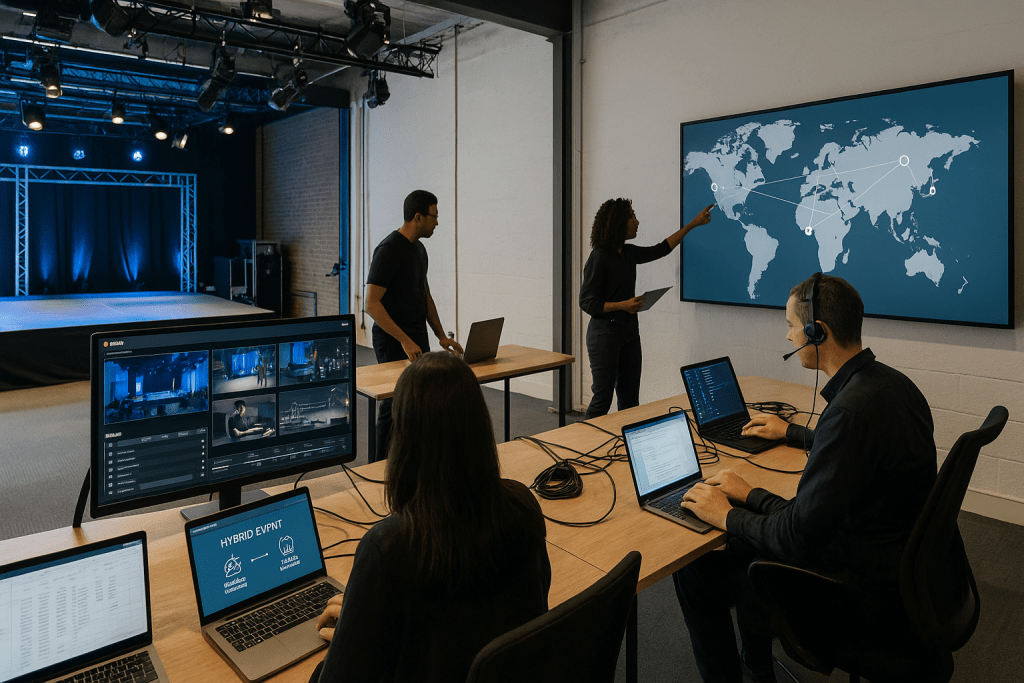
Organisations delivering experiential and hybrid events across Europe, the Middle East and Africa (EMEA) are rethinking how internal culture underpins commercial performance. Rather than treating well-being and flexibility as optional benefits, a growing number of agencies and in-house teams are positioning culture as a strategic asset that directly supports global business growth.
This shift is particularly visible within networked event and brand experience agencies operating across multiple markets. Leaders in the region describe a move from traditional, office‑centric models to more community‑driven structures designed to retain talent, enable cross-border collaboration and sustain high‑pressure delivery schedules without eroding teams’ long‑term capacity.
Background: culture as an operational backbone
For many event organisations, the turbulence of recent years has accelerated a reassessment of how teams are built and supported. The rapid pivot to virtual and hybrid events, followed by the return of large-scale in‑person programmes, placed intense demands on producers, creatives, technologists and logistics specialists. At the same time, expectations around flexible work, inclusion and work–life balance have risen sharply.
In EMEA, where agencies commonly manage projects spanning multiple time zones and regulatory environments, these pressures are magnified. Internal culture has evolved from a largely HR‑driven concern into something closer to an operating system: it shapes how teams share knowledge, handle late‑stage changes, and sustain creativity across long delivery cycles.
Leaders in the region also report that clients are scrutinising the make‑up and resilience of delivery teams more closely. For complex experiential programmes – from global product launches to multi‑market B2B conferences – brands are increasingly interested in partner agencies that can demonstrate low staff churn, diverse teams, and proven collaboration models between offices.
Key developments in EMEA agency culture
Several interlinked trends are defining how culture is being formalised and scaled within EMEA-based experience agencies and event teams:
- Codifying culture into playbooks: Rather than relying on informal traditions, some organisations are documenting cultural principles, working norms and communication expectations. These playbooks often cover how teams collaborate across regions, how hybrid work is managed, and what support structures are available during peak event delivery periods.
- Prioritising flexibility and family‑friendly policies: Many leaders in the sector reference the personal trade‑offs historically associated with senior roles in events – long hours, extensive travel, and time away from family. In response, agencies are investing in flexible scheduling, remote‑friendly collaboration practices and more predictable travel patterns where possible.
- Embedding community into project work: Internal community initiatives are increasingly tied directly to client delivery. Cross‑market mentorship, project‑based learning and structured knowledge sharing are being used to ensure that local insights from EMEA markets inform global strategies and creative concepts.
- Strengthening inclusion and representation: Event and experiential teams are paying more attention to how lived experience – including gender, culture and geography – informs creative output. This is particularly relevant in EMEA, where campaigns must resonate with diverse local audiences while aligning with global brand narratives.
- Linking well-being to business metrics: Agencies are beginning to connect staff well-being initiatives to measurable outcomes such as reduced burnout, lower turnover and improved project continuity. This focus supports the case for ongoing investment in culture, rather than treating it as a discretionary cost.
Community-driven approaches to global projects
One of the most significant cultural shifts in the EMEA region is the move to community-led delivery models for complex, global programmes. Instead of siloed office structures, teams are increasingly organised around communities of practice – for example, experience designers, content strategists, production specialists and technical directors who collaborate across borders.
These communities typically share tools, templates and playbooks that enable consistent delivery standards while still allowing for local adaptation. For multinational clients, this can result in event portfolios that feel consistent at a brand level but are tailored to regional audience expectations, from content formats to in‑person and digital engagement tactics.
Internal culture plays a central role in whether these communities function effectively. Transparent communication, clear expectations around availability, and shared recognition programs help maintain cohesion when teams are distributed across multiple EMEA hubs and working with partners in the Americas and APAC.
Industry impact for event and experiential programmes
The reorientation around culture and community is having tangible effects on how events are conceived and delivered:
- More resilient delivery teams: Organisations that invest in culture are reporting stronger continuity on key accounts. Teams with lower churn are better able to retain institutional knowledge, manage recurring flagship events, and adapt strategies based on multi‑year performance data.
- Higher creative consistency across regions: Shared cultural frameworks and cross‑market communities reduce fragmentation in global programmes. This is particularly important for hybrid experiences, where digital platforms must support coherent journeys for audiences in multiple countries.
- Improved client collaboration: As agencies become more open about how their internal cultures operate, clients gain clearer insight into who will be delivering their programmes and how those teams are supported. This transparency can help de‑risk large‑scale experiential investments.
- Better integration of technology: Culturally aligned teams are often quicker to adopt and standardise new event technologies – from registration and mobile apps to virtual environments and analytics platforms – because there is greater trust and shared understanding of why tools are being introduced.
Why this matters for event professionals and technology providers
For event strategists, marketers and in‑house corporate teams, the way agencies structure their culture has direct implications for technology choices, budget planning and long‑term partnerships.
On the client side, understanding an agency’s cultural model can help decision-makers assess whether partners are equipped to manage multi‑year transformation programmes, such as moving from ad hoc events to integrated, data‑driven experience portfolios. Teams that prioritise flexibility and community are often better positioned to test new formats – including emerging virtual platforms or AI‑driven personalization tools – without destabilising delivery.
For technology vendors, the shift towards codified culture and cross‑market communities in EMEA creates more structured pathways for deployment and support. When agencies have clear internal playbooks and defined communities of practice, it becomes easier to roll out new event tech solutions consistently across accounts and territories. Vendors can work with dedicated stakeholder groups responsible for adoption, training and feedback, rather than engaging ad hoc with disparate project teams.
Talent strategy is another consideration. As competition for experienced producers, engineers and strategists intensifies, agencies with strong, well‑communicated cultures may gain an advantage in recruitment and retention. For global brands seeking stability in their event and experiential programmes, the ability of partners to retain key personnel is increasingly part of procurement and evaluation discussions.
Conclusion
The EMEA region is emerging as a proving ground for culture‑driven approaches to global experiential and hybrid events. Agencies and in‑house teams are moving beyond surface‑level well-being initiatives to build structured, community‑based models that connect internal culture with commercial outcomes.
For event professionals and technology providers, this evolution highlights the importance of looking beyond creative credentials and platform features when selecting partners. How a team is built, supported and connected across markets is now a core factor in the ability to deliver complex, sustainable, global event programmes.
As the sector continues to adapt to changing audience expectations, hybrid formats and data‑centric strategies, EMEA’s emerging culture playbooks are likely to influence how agencies worldwide approach talent, collaboration and technology in the years ahead.