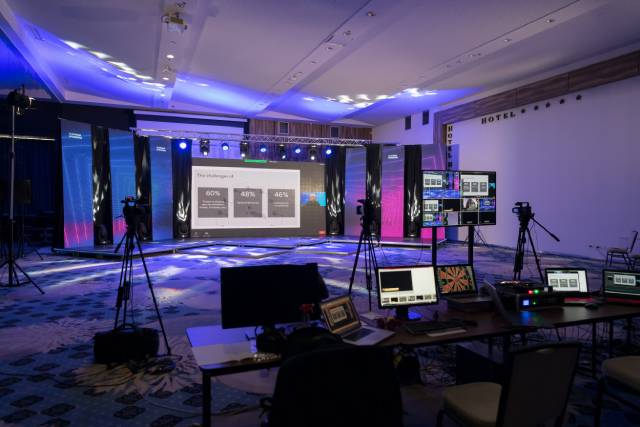
In the modern event landscape, the demand for immersive, visually captivating experiences has never been greater. Audiences no longer want to be passive observers; they want to feel part of the narrative. Among the technologies transforming this shift, 3D projection has emerged as a groundbreaking medium that redefines how people engage with events, environments, and storytelling. From corporate galas to live concerts, brand activations, and museum exhibits, 3D projection events are reshaping the boundaries of creative expression and audience interaction.
Understanding 3D Projection Technology
At its core, 3D projection is an advanced visual display method that projects images onto physical surfaces—walls, buildings, stages, or objects—to create a three-dimensional illusion. Unlike traditional flat-screen projection, 3D projection uses depth mapping, spatial calibration, and projection mapping software to align visuals precisely with the geometry of real-world surfaces. The result is a seamless fusion of the physical and digital realms, where static architecture transforms into dynamic storytelling canvases.
Key Components of 3D Projection Systems
- High-Lumen Projectors:
For an image to appear lifelike and vivid, brightness is crucial. Industrial-grade projectors with high lumen output (typically between 20,000 to 50,000 lumens) are used to ensure visibility even in ambient lighting conditions.
- Projection Mapping Software:
Specialized software calibrates and “maps” the projected image to the contours of the target surface. The process involves 3D modeling, warping, and blending to maintain visual integrity across irregular surfaces.
- Media Servers:
These are powerful systems that store, render, and synchronize high-resolution content in real time. They also manage multi-projector rental setups to ensure frame-perfect synchronization and color consistency.
- Sensors and Tracking Systems:
In advanced setups, motion sensors and LiDAR scanners help maintain alignment and allow for interactive or real-time adaptive visuals.
- 3D Content Creation:
The projected visuals are typically developed in 3D animation software such as Maya, Blender, or Unreal Engine, ensuring high-resolution, photorealistic rendering optimized for projection.
The Science Behind the Immersion
What makes 3D projection events so compelling is the way they leverage human perception. The technology exploits principles of binocular disparity, depth cues, and motion parallax to trick the brain into perceiving virtual depth and spatial realism. This results in visuals that appear to “pop out” of surfaces or envelop the viewer entirely.
When integrated with spatial audio systems and interactive lighting, the overall sensory experience becomes fully immersive. This multi-sensory synchronization is what drives emotional engagement and creates memorable experiences for attendees.
Click here to learn about Video Solutions for Corporate and Hybrid Events and LED Screens and Display Monitors for High-Impact Presentations.
Applications of 3D Projection in Modern Events
The versatility of 3D projection makes it applicable across a wide range of industries and event types. Here are several leading applications:
1. Corporate Events and Product Launches
Brands use 3D projection to create dynamic presentations that transcend traditional PowerPoint visuals. Instead of a static stage, the entire environment becomes an animated storytelling platform. Products can be virtually “deconstructed” or visualized at a molecular level, enabling audiences to understand their design and functionality in unprecedented ways.
2. Live Concerts and Music Festivals
Artists and stage designers utilize projection mapping to extend the physical boundaries of the stage. Entire backdrops transform in sync with the music, producing a living, pulsating environment that reacts to rhythm and tempo. When paired with holographic visuals, it creates the illusion of performers interacting with digital counterparts.
3. Museums and Exhibitions
3D projection adds a narrative layer to static displays. Historical artifacts or scientific exhibits can be enhanced through contextual projections, enabling viewers to visualize how an artifact was used or how an environment looked centuries ago.
4. Architectural Projection Shows
Large-scale outdoor events often leverage 3D projection to turn buildings into storytelling mediums. By mapping visuals onto façades, creators can animate structures, simulate transformations, or bring architectural history to life in an awe-inspiring way.
5. Immersive Theatrical Performances
In modern theater productions, 3D projection enables dynamic set transitions without physical set changes. The same stage can instantly transform from an ancient city to a futuristic landscape, enhancing narrative fluidity and reducing production costs.
Technical Considerations for Successful 3D Projection Events
Delivering a flawless 3D projection experience requires meticulous planning and technical precision. Below are some crucial parameters event professionals must consider:
1. Surface Geometry and Texture
The physical surface plays a critical role in projection clarity. Smooth, matte, and light-colored surfaces yield the best results. Complex surfaces with varying depths require precise 3D scanning and calibration to ensure alignment accuracy.
2. Ambient Lighting Conditions
Excessive ambient light can wash out projections. Controlled lighting systems or high-lumen projectors are essential to maintain color fidelity and contrast, especially in outdoor or daylight environments.
3. Viewing Angles and Audience Positioning
Since 3D illusions depend heavily on perspective, the viewing area must be carefully designed. The best results are achieved when the majority of the audience views from the intended focal points established during projection mapping.
4. Content Resolution and Frame Rate
High-resolution content (4K and above) ensures crisp visuals even when projected on large surfaces. Additionally, frame rates above 60 FPS reduce motion blur, critical for dynamic or fast-moving visual sequences.
5. Synchronization and Audio Integration
The impact of 3D projection amplifies when synchronized with sound effects, music, and lighting. Media servers and timecode synchronization systems ensure precise timing between visual and auditory cues.
Integrating Interactivity and Real-Time Control
Recent advancements in real-time rendering technologies have enabled interactive 3D projection experiences. Motion tracking, gesture recognition, and AI-based interaction systems allow audiences to influence visuals dynamically. For instance:
- Gesture-based Interaction: Attendees can manipulate visual elements using hand movements.
- Audience-triggered Effects: Sensors can trigger visual responses when participants move through designated areas.
- AR/VR Integration: Combining projection mapping with augmented reality (AR) devices deepens immersion by blending physical and virtual perspectives.
These innovations make the event experience not just immersive, but participatory—fostering emotional engagement and personalization at scale.
Benefits of 3D Projection for Event Organizers and Brands
1. Enhanced Engagement
Immersive visuals command attention. By surrounding the audience with motion and depth, 3D projection ensures that brand messages or artistic narratives leave a lasting impression.
2. Versatility and Scalability
The same projection setup can be adapted for multiple event types—corporate, entertainment, educational, or cultural. The scalability of projection technology makes it suitable for both small indoor spaces and large-scale outdoor venues.
3. Cost-Effective Production
Compared to constructing physical sets, 3D projection reduces material and labor costs. Digital content can be reused or adapted, offering long-term return on investment.
4. Eco-Friendly Solution
By minimizing physical materials and waste, 3D projection supports sustainable event practices—a key priority for modern organizers.
5. Customization and Storytelling
Every event can be uniquely branded through custom visuals, animations, and interactive storylines, ensuring that no two experiences are alike.
Challenges and Future Developments
While 3D projection offers unparalleled creative potential, several challenges persist:
- Technical Complexity: Requires skilled technicians and accurate calibration to achieve flawless results.
- High Initial Investment: Professional-grade projectors and software come at a premium cost.
- Environmental Variables: Outdoor setups must account for weather conditions, ambient lighting, and surface irregularities.
However, emerging trends are rapidly addressing these barriers. The AV integration of AI-assisted calibration, laser-based projection systems, and cloud-based media servers is streamlining workflows and reducing operational costs. As computational power grows and rendering engines become more efficient, the fidelity and realism of projected content will continue to evolve.
The Future of Immersive Events
The convergence of 3D projection with other immersive technologies—such as XR (Extended Reality), spatial computing, and volumetric capture—points toward a new era of experiential design. Imagine a concert where holographic performers share the stage with real musicians, or a conference where 3D data visualizations hover in mid-air, interactively manipulated by presenters.
As audiences increasingly value engagement, personalization, and sensory richness, 3D projection events will remain at the forefront of innovation. The technology not only amplifies aesthetic impact but also enhances storytelling, emotional resonance, and brand memorability.
Summary of 3D Projection
3D projection has evolved from a niche visual effect into a cornerstone of immersive event design. Its ability to merge digital artistry with physical environments empowers creators to craft transformative experiences that captivate audiences and elevate brand presence. For event organizers, marketers, and experience designers, investing in 3D projection technology is not merely a trend—it’s a strategic step toward the future of experiential communication.
As the boundaries between reality and imagination continue to blur, 3D projection for immersive event experiences stands as a testament to how technology can transform not just what we see, but how we feel and connect with the world around us.
Academic References for 3D Projection
- Interactive Technology for Immersive Business Event Experiences
- Image projection in immersive 3D visualization laboratory
- Strange world: immersive experience through interaction and projection mapping
- 3D projection on physical objects: Design insights from five real life cases
- Social immersive media: pursuing best practices for multi-user interactive camera/projector exhibits
- 3–D cinema: Immersive media technology
- Quality of experience for 3–D immersive media streaming
- Immersive technologies
- From 3D reconstruction to virtual reality: A complete methodology for digital archaeological exhibition
- Three-dimensional image processing in the future of immersive media